
What is Scratch programming?
How it actually works
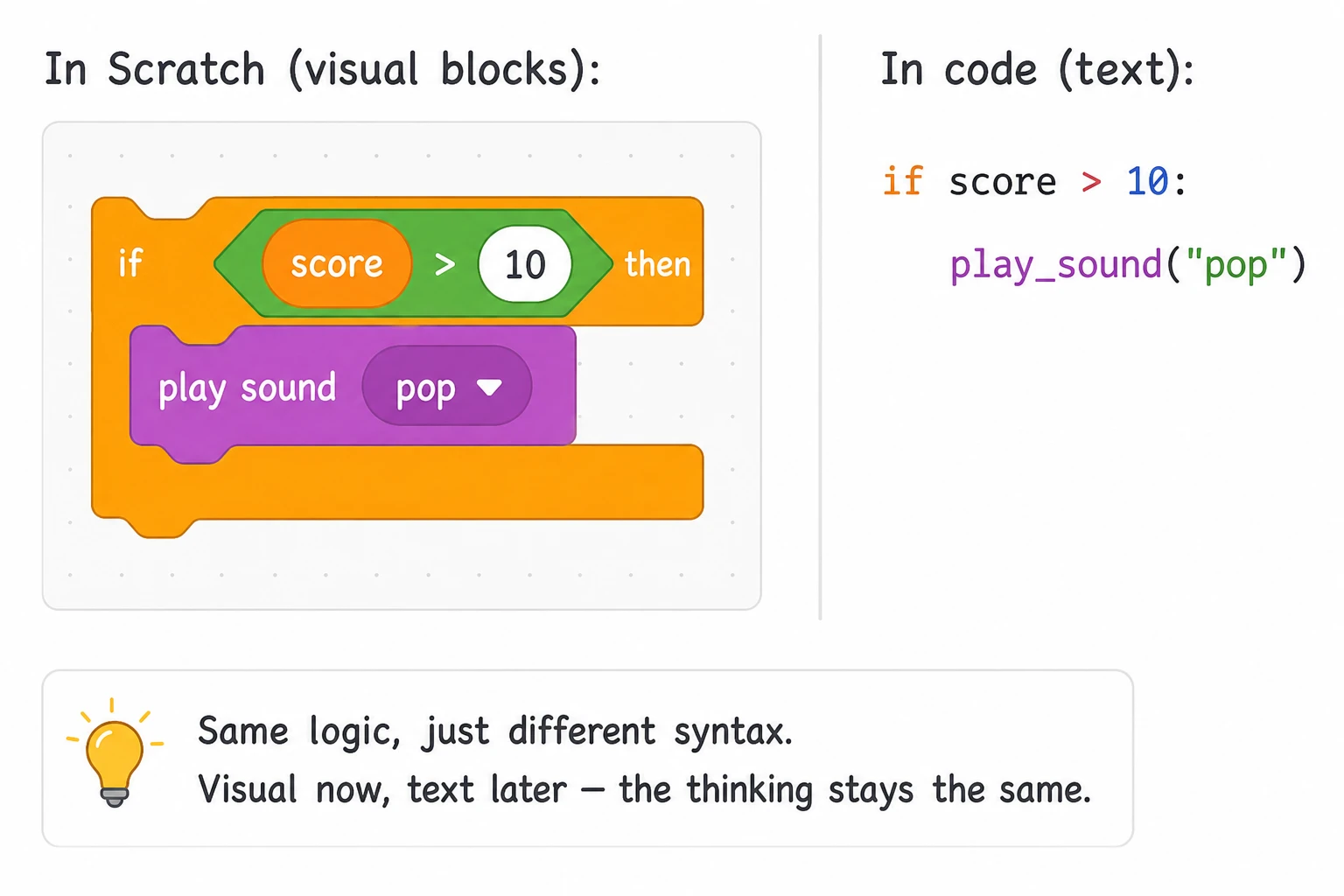
Instead of writing if score > 10: play sound, a kid drags an "if" block, drops a "score" block inside it, and connects a "play sound" block below. The logic is identical to what professional programmers write — only the format is visual. When your kid moves to Python or JavaScript later, they already think like a programmer. They're just learning new syntax.
What kids build with it
Most kids start with simple animations — a cat walking across a screen. Within a few months they're building platformer games, quiz apps, interactive stories, and music visualizers. The Scratch community has over 100 million registered users and hundreds of millions of shared projects, so there's no shortage of inspiration (or projects to remix and learn from).
How it fits into a learning path
Scratch is the standard first step in coding for kids ages 5–10. After Scratch, the natural progression is Python — the syntax is different but the thinking is the same. Kids who spend a year in Scratch typically pick up Python significantly faster than those who start cold.


