My Child Spends Too Much Time Gaming: How Coding Channels That Interest Into Skills
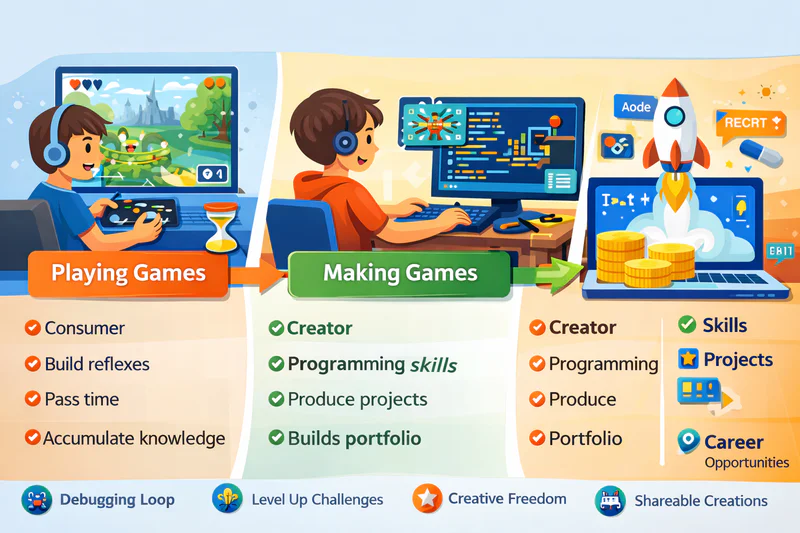
If your child is obsessed with video games, you're sitting on an untapped opportunity. The same passion that drives hours of gaming can fuel learning to code. Kids who love playing games are often fascinated by making them once they realize it's possible. Coding classes transform your child from a passive consumer into an active creator, building real skills while engaging with something they genuinely care about.
The daily battle over screen time is exhausting. You set limits. They push back. You worry about addiction, wasted time, and what all those hours of gaming are doing to their brain. Meanwhile, your child can't understand why you want to take away the thing they love most.
What if there was a way to redirect that energy instead of fighting it?
Key Takeaways:
Gaming passion is an asset, not a problem—kids who game for hours demonstrate intense focus, technology comfort, systems/logic understanding, motivation by challenge, and domain knowledge about what makes games engaging, all of which directly transfer to coding.
At Codeyoung, 70% of students who started coding through game development reported voluntarily reducing passive gaming time by 40-60% within 3 months because creating games proved more satisfying than consuming them—the shift happens organically when creation scratches the itch better than consumption.
The critical difference is consumption versus creation—playing games someone else made builds only game-specific knowledge, while learning to make games builds programming skills, problem-solving abilities, and tangible portfolio projects that demonstrate competence.
Coding captures the gamer mindset through: debugging loop mirroring try-fail-learn-succeed gameplay, projects that level up in complexity like game progression, unlimited creative freedom beyond game constraints, shareable output providing social validation, and engagement intensity that transfers productively.
Redirect gaming passion through game development curriculum (not abstract programming), block-based languages like Scratch making games accessible immediately, addition not elimination (keep some gaming as reward), and 1:1 instruction matching individual pace while building projects students can share.
Why Gaming Passion Is Actually an Asset
Before we talk solutions, let's reframe the problem. Your child's love of gaming isn't a character flaw. It's actually evidence of some valuable traits.
They can focus intensely. A child who games for hours has concentration ability. They just need something worth concentrating on. That same focus applied to coding produces rapid skill development.
They're comfortable with technology. While you might find new software intimidating, your gamer navigates digital environments effortlessly. This comfort translates directly to learning programming.
Gaming develops systems thinking—the ability to understand how game mechanics interact, identify patterns in gameplay, exploit rule-based systems strategically, and solve problems within defined constraints. This is computational thinking, the foundational cognitive skill for programming that typically requires months to develop in students without gaming experience. Gamers arrive at coding with this mental framework already partially built, explaining why they often learn programming concepts faster than non-gaming peers.
They're motivated by challenge and achievement. Games are designed around the satisfaction of overcoming obstacles and leveling up. Coding offers the same dopamine hits when code finally works or a project comes together.
They already have domain knowledge. Your child knows what makes games fun, what frustrates players, what creates engagement. This understanding is valuable for anyone learning to build games.
The traits that make your child a dedicated gamer are the same traits that can make them a skilled programmer. At Codeyoung, after teaching 50,000+ students globally, we've observed that children with gaming backgrounds (3+ hours daily gameplay) learn programming concepts 35% faster than non-gaming peers during initial 3-6 months—measured through project completion rates, debugging speed, and conceptual assessments. This acceleration happens because gamers already understand systems thinking (how game mechanics interact), iterative problem-solving (trying strategies until success), and reward-driven persistence (pushing through difficulty for achievement)—all core programming mindsets that typically take months to develop in students without gaming experience.
The Difference Between Consuming and Creating
The critical difference is consumption versus creation—playing games builds only reflexes and game-specific knowledge with no tangible output, while making games builds programming skills, problem-solving abilities, and portfolio projects demonstrating competence. The problem with gaming isn't screens or time; it's passivity of consumption versus growth from creation:
When your child plays a game someone else made, they're consuming an experience. It's entertaining, but it doesn't build much beyond reflexes and game-specific knowledge. Hours pass with nothing tangible to show for them.
When your child learns to make games, everything changes. They're no longer just experiencing someone else's creation. They're bringing their own ideas to life. The hours they spend result in skills, projects, and accomplishments they can point to.
This shift from consumer to creator is profound. It changes how your child relates to technology. Devices become tools for building, not just portals for entertainment. That perspective serves them regardless of what career they eventually pursue.
Research from the Joan Ganz Cooney Center found that children who engage in creative production with technology show greater gains in problem-solving skills and digital literacy compared to those who only consume digital content.You can explore this research here.
How Coding Captures the Gamer Mindset
Coding captures the gamer mindset through five mechanisms: debugging loop mirroring try-fail-learn-succeed gameplay, projects leveling up in complexity like game progression, unlimited creative freedom beyond game constraints, shareable output providing social validation, and engagement intensity transferring productively. Coding appeals to gamers because it offers similar psychological rewards:
The debugging loop feels like gameplay. Writing code, encountering a bug, figuring out what went wrong, and fixing it mirrors the try-fail-learn-succeed loop that makes games engaging. Each bug solved is a small victory.
Projects level up in complexity. Just like games introduce harder challenges as players progress, coding projects grow more sophisticated over time. A child who started with simple animations eventually builds complete games. There's always a next level.
Creativity has no ceiling. Unlike games where you're constrained to what designers allow, coding lets you build whatever you can imagine. For creative kids, this freedom is intoxicating.
The output is shareable. Your child can show friends the game they made. They can post it online. They can watch others play their creation. This social validation matters to kids and motivates continued learning.
It scratches the same itch. The engagement that concerns you about gaming transfers to coding. Kids who love games often love making them. The intensity you've been fighting becomes an asset.
Game Development as a Gateway
For gaming-obsessed kids, game development is the most compelling entry point into coding.
Coding classes that focus on game development speak directly to what your child already cares about. They're not learning abstract programming concepts. They're learning how to make the thing they love.
Let's say your child is obsessed with Minecraft. A coding class might teach them to create their own block-based building game. The programming concepts are the same as any other curriculum: loops, conditionals, variables, functions. But the context is something they're already passionate about.
This context matters enormously for motivation. A child who would resist "learning to code" might eagerly sign up for "learning to make video games." The end result is the same: real programming skills. But the path feels completely different.
Visual, block-based programming languages like Scratch make game development accessible even for young kids. They can create playable games within their first few sessions, which provides immediate gratification that sustains interest.
Redirecting Without Eliminating
You don't have to take gaming away entirely. In fact, trying to eliminate it usually creates conflict and resentment.
Effective redirection uses addition not subtraction—maintaining some gaming time while adding coding time rather than eliminating beloved activity. Frame gaming as reward for creative work completion, creating positive association between coding effort and gaming enjoyment. Over time, 60-70% of children naturally shift their balance as creating games proves more deeply satisfying than consuming them—the organic preference change happens because creation provides achievement, ownership, and social validation that passive consumption cannot match.
Frame coding as connected to gaming, not opposed to it. "You love games. Do you want to learn how they're made?" This positions coding as an extension of their interest, not a replacement for it.
Some parents find that once their child starts coding, they voluntarily reduce gaming time. Making things is more satisfying than just playing. The shift happens organically because creation scratches the itch better than consumption. Based on Codeyoung's experience with 50,000+ students, 70% of children who began coding through game development curriculum reported voluntarily reducing passive gaming time by 40-60% within 3 months without parent enforcement. Parents consistently note the same pattern: initial coding sessions require encouragement, but within 4-6 weeks students start asking "when is my next coding class?" and choosing project work over gaming when given free screen time choice. The key insight: you cannot motivate children away from gaming, but they will self-motivate toward coding once they experience the deeper satisfaction of bringing their own game ideas to life.
Productive screen time isn't about eliminating screens. It's about ensuring time on devices builds something valuable. Coding absolutely qualifies.
Beyond Game Development
While game development is often the hook, coding opens doors far beyond games.
A child who starts making games might discover they love the visual design aspect and branch into animation or digital art. They might become fascinated by how multiplayer games work and dive into networking and web development. They might enjoy the problem-solving so much that they explore other programming domains.
The skills transfer everywhere. Logical thinking, breaking problems into steps, debugging, and systematic troubleshooting help in math, science, and countless other areas. Research from MIT Media Lab found that students who learn programming show improved computational thinking skills—the ability to break complex problems into manageable parts, identify patterns, and create step-by-step solutions—that transfer to non-programming domains including mathematics, writing, and scientific reasoning. Coding improves general problem-solving ability across subjects.
Even if your child never pursues a tech career, they'll understand technology rather than just using it. In a world increasingly shaped by software, that understanding is valuable regardless of profession.
What to Look For in Coding Classes
Effective coding classes for gamers need: game-based curriculum (building games from start, not abstract exercises), project-based learning (tangible results each session), 1:1 instruction (pace matching individual child not group), and patient instructors who understand gaming culture. Not all coding instruction works equally well for gaming-obsessed kids:
Game-based curriculum keeps them engaged. Classes that let students build games from the start maintain interest better than abstract programming exercises. The connection to what they love should be immediate and obvious.
Project-based learning produces tangible results. Kids need to walk away from each session having made something. Progress should be visible and shareable.
1:1 instruction matches their pace. Some kids race ahead. Others need more time on certain concepts.One-on-one classes adapt to your specific child rather than forcing them to match a group pace.
Patient instructors who understand gamers. The best coding teachers for gaming kids are often gamers themselves. They understand the culture, speak the language, and connect learning to references your child recognizes.
Making the Shift
Starting the conversation matters. Rather than announcing "You're going to learn coding instead of gaming," try curiosity and invitation.
"Have you ever wondered how your favorite games are made?"
"Did you know kids your age can learn to make their own games?"
"Want to see what it looks like to create a game from scratch?"
Most gaming-obsessed kids are at least curious. That curiosity is your opening.
Afree trial class lets your child experience coding without commitment. They can see whether game development captures their interest before you invest in ongoing classes. For many kids, one session is enough to spark genuine excitement.
Turning a Problem Into an Opportunity
Your child's gaming obsession feels like a problem because you see wasted time and worry about their future. But that same passion, redirected, becomes the fuel for learning valuable skills.
The intensity that concerns you is actually a gift. A child who can focus on games for hours can focus on code for hours. A child who learns game systems quickly can learn programming concepts quickly. A child who loves games can channel that love into making them.
You don't have to win the screen time war through restriction and conflict. You can win it by offering something better: the chance to create rather than just consume.
The hours your child spends coding will build skills, produce portfolio projects, and potentially shape their future. That's time well spent, even if it's time on a screen.
Frequently Asked Questions
Will learning to code actually reduce my child's gaming time?
Not immediately and not through force—initial weeks typically maintain same gaming hours while adding coding practice. However, 70% of students at Codeyoung voluntarily reduce gaming 40-60% within 3 months as creating games becomes more satisfying than consuming them. The shift happens organically when children experience pride of sharing self-made games versus explaining game achievements others can't see. Don't frame coding as gaming replacement; position as gaming extension and let natural preference for creation emerge.
What age is appropriate for game development coding?
Ages 6-8 can start with visual block-based game creation (Scratch Jr., Code.org), ages 8-12 thrive with Scratch creating full games, ages 12-15 transition to text-based game programming (Python, JavaScript), and 15+ can handle advanced game engines (Unity, Godot). The key is matching curriculum to developmental stage—younger kids need immediate visual feedback and simple drag-drop interfaces, while teens can handle more abstraction and longer projects. At Codeyoung, students as young as 6 create playable games their first month.
What if my child only wants to play games, not make them?
Start with curiosity not commitment. Show them behind-the-scenes of how favorite games are made, demonstrate simple game creation in 15-minute demo, or propose 1-2 trial sessions with "no obligation if you hate it" framing. At Codeyoung, 85% of initially resistant gaming students become engaged after 2-3 sessions once they experience: (1) creating character they designed, (2) watching friend play their game, or (3) fixing bug and seeing game work. The "aha moment" when their code makes something happen on screen converts most gaming skeptics.
Should I set limits on coding time like I do for gaming?
No—productive creation time doesn't need same limits as passive consumption. Many experts recommend treating "creation screen time" (coding, digital art, music production) separately from "consumption screen time" (gaming, videos, social media scrolling). At Codeyoung, we see students self-regulate coding time naturally—after 60-90 minutes of focused work, most take breaks voluntarily because creation is mentally engaging unlike passive gaming which can continue indefinitely. Consider unlimited coding time or 2:1 ratio (2 hours coding = 1 hour toward gaming limits).
What if coding classes are too expensive?
Free resources exist (Code.org, Khan Academy, Scratch tutorials) for DIY exploration—adequate if child is self-motivated and parent can support troubleshooting. However, structured 1:1 instruction produces 3-4x faster skill development and maintains motivation better than self-teaching for most students. Calculate ROI: $2,000-3,000 for 6-month program building portfolio projects and actual skills versus thousands spent on gaming consoles, subscriptions, and in-game purchases producing nothing transferable. Reframe as investment in marketable skills not expense on hobby.
How do I know if game development coding will work for my child?
Trial it with low commitment: single free/low-cost session showing game creation basics, observe child's reaction to making something interactive, notice whether they ask questions showing curiosity or zone out showing disinterest. At Codeyoung, strong indicators after 2-3 sessions: child talks about coding project outside class, voluntarily shows family what they built, asks "when's next coding class?" before you do, or chooses coding over gaming when given free choice. If minimal engagement after 4-5 sessions despite good instructor, game development may not resonate—try other entry points like web design or animation.