How Web Development Helps Kids Improve Creativity and Design Sense
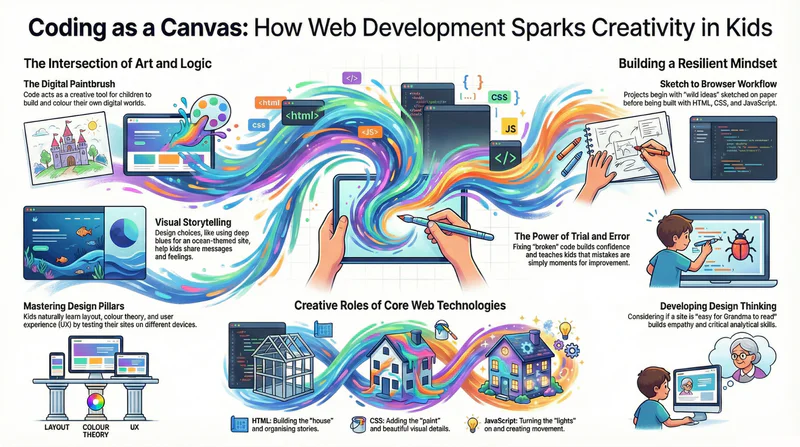
When it comes to web development, the first thing that comes to your mind is dry coding, endless lines of syntax, and debugging sessions, but there's more to it. This blog post explores how it's actually a vibrant canvas for web development creativity that kids can enjoy. Apart from rote memorization, web development allows kids to build a website and learn web design in a way that is full of colors and tells compelling stories.
This creative medium dismantles the myth that tech is only for math whizzes. It empowers even the most artistic kids to build their own websites and digital worlds. By diving into HTML, CSS, and JavaScript, young learners sharpen their design instincts. Learning web design opens doors to both creative expression and technical mastery through the creative process of website creation. Many web designers start this way.
Beyond Logic: How Web Development Creativity Kids Can Unlock
Coding is not just about following strict rules or typing numbers into a computer. Instead, it gives a huge boost to wild ideas and imagination. Many children start their journey with basic coding by learning how to make fun visuals, like a scrolling galaxy background or moving stars. Every small choice they make demands creativity. To make their vision work, it is achieved by critical thinking in kids.
In many online courses and online classes, web development supports kids to experiment without fear of making mistakes. They get to play along with different fonts, rearrange colorful layouts, and try new buttons. Finally, the web design instincts they have will come to life on the screen.
We remember this one kid who built a fan site for their favorite hobby. They used their coding knowledge to add slick hover effects that changed colors when touched. It was amazing to see how abstract thoughts suddenly become real things. Parents often tell me their kids now sketch out entire website layouts in notebooks before they even start typing. When they build their own websites, that imagination gets digitized and shared with the whole world.
The Intersection of Art and Technology
Web development is a special place where art and technology meet. Here, kids can explore their creativity while learning technical skills like writing Hypertext Markup Language and using html css and JavaScript. They follow simple logical steps, which help them understand how websites work.
This mix of art and coding makes web design fun and easy to understand. For children who enjoy drawing, coding acts like a digital paintbrush. Every visual element they place on the screen and the various visual details they create reflect their artistic ideas. Children who love writing also benefit because HTML helps organize their stories clearly.
What makes this combination so powerful is how it builds confidence. A child interested in graphic design soon realizes that coding isn’t just boring mathematics. It is a way to bring imagination to life, turning ideas into real, interactive creations. With web programming, kids see that technology is not separate from art; it can be a helpful partner. This approach encourages problem-solving, creativity, and self-expression all at the same time. Kids gain both skills and confidence while having fun.
Visual Storytelling: Helping Kids Grow Their Design Skills Through Web Coding
Websites are more than just a place to find information; they are visual stories waiting to be told. When kids start exploring web development, they quickly see that every design choice is a way to share a message. Before a visitor even reads a word, the colors and images are already sharing feelings and ideas. This is where a child’s creativity really starts to shine.
Imagine a student building a site about protecting the ocean. They might use deep blues and greens to make it feel like an underwater world. Adding animated waves that pull people in, or picking fonts that feel both urgent and hopeful, helps tell their story. By designing their own sites, kids learn that every button and heading has a purpose. They begin to think like both a storyteller and a designer, creating digital spaces that show who they are and what they care about.
Understanding Layout, Color, and User Experience
Important design concepts feel much easier when kids learn them through web development. Creating a good layout means giving enough space to a drawing or a section so the page doesn’t look messy. Tools like CSS Grid and Flexbox make sure everything is lined up perfectly. These coding concepts might feel hard at the start, but because kids see their changes happen instantly, the process stays fun and interesting.
The right colors make web pages look friendly and professional. Young web designers quickly learn that matching colors looks much better than colors that clash. User experience is all about making a website easy and fun to use. Kids test web pages on different devices, like phones and tablets, until the user interface feels just right. This kind of practice helps them build problem-solving skills and teaches them about 碰responsive design. Website builders with drag and drop tools are a great way for beginners to experiment with new ideas before they learn html css. Adding dynamic content is the final touch that makes a website feel alive, exciting, and fun for everyone who visits.
The "Trial and Error" Method: Building Resilient Designers
Perfection slowly disappears in web design. A kid makes a colorful menu and it looks strange. They change the code and try again. This repeated process shows how real creativity works. As kids keep trying, the fear of mistakes fades. Young learners figure out how to fix errors and feel proud of their coding solution.
Syntax errors start feeling like learning moments. Confidence grows with every “I broke it, but I fixed it” experience. Tools like CodePen give instant results. A child’s first website may look messy at first, but it slowly becomes clean. They learn that web pages should help users.
This habit builds problem solving skills and problem-solving skills beyond coding. When kids face problems, they use the same try-and-fix thinking. This type of problem-solving strengthens critical thinking skills in every subject. Online classes and interactive lessons support this mindset. Whether kids use a visual programming language or write HTML code, they learn that improvement comes from practice. The computational thinking they develop through these challenges is invaluable.
From Sketch to Browser: The Creative Workflow
When kids start learning web development, they often follow the same steps that professional creators use, but in a way that feels like play. Most projects begin away from the screen, where they draw their wildest ideas on paper, such as big clickable buttons, colorful pages, or moving space backgrounds. This is where they learn that web development is a creative outlet where you don’t need logic alone to build something amazing.
Once the sketch is ready, they use different coding languages and programming languages to bring those ideas to life. They learn that HTML builds the house, CSS adds the beautiful paint, and JavaScript makes the lights turn on. By practicing web design, children become tomorrow's innovators who will eventually build the apps we use and design complex mobile applications.
Whether they take free classes, join online courses, or attend programming language workshops, they gain important skills like problem-solving. Through web programming and app development, kids learn to take feedback from friends to make their work better. By the time they reach the final step of web hosting, they have finished a journey of creating websites that build real confidence.
Why Design Thinking Creates Lifelong Advantages
Web development plants the seeds of design thinking. Kids use this thinking in daily life, like organizing creative projects. Empathy grows through web design. Kids ask, “Is this easy for Grandma to read?” These questions build critical thinking skills.
In school, kids who learn web development create clear projects. Teachers often notice improved digital literacy. Many careers value these skills, including graphic design, engineering, and marketing. A web developer is respected because they combine creativity with logic. Computer science principles are learned naturally here.
In today’s world of artificial intelligence, kids who build websites gain flexible thinking. Taking advantage of these opportunities helps them prepare for the future.
Getting Started: Best Resources for Young Web Developers
Parents who want to support their child’s journey into web development have more choices than ever before. Free classes from platforms like freeCodeCamp, Code.org, and Khan Academy offer clear learning paths that teach HTML, CSS, and JavaScript step by step, progressively, without costing a penny. These platforms include interactive lessons with instant feedback, making them perfect for kids learning at their own pace without pressure.
For younger kids or those new to coding, visual programming language tools like Scratch offer a gentle way to start. The drag-and-drop style helps explain coding concepts without worrying about syntax errors, which can often be frustrating for beginners who are just starting. Once kids feel confident with logic and order, moving to real web programming feels smooth and natural, not scary.
Website builders like Wix and WordPress are a great middle option. Kids can explore design ideas using ready-made blocks, then slowly learn to customize things with their own code. This mix builds confidence and helps kids understand how websites actually work behind the scenes.
More interested kids can try kids' courses focused on web design. Platforms like Codecademy, Treehouse, and Udemy provide age-friendly lessons that cover everything from basic HTML to front-end frameworks. Some courses include turtle graphics, which make learning more visual and fun for different types of learners.
Age and experience level are important when choosing learning tools. A curious 7-year-old might enjoy Scratch Jr’s playful style, while a motivated 13-year-old may be ready to build full websites using custom HTML code. The goal is to match the difficulty level to keep kids engaged without making things too hard or stressful.
Having a good physical setup also helps. A simple coding space with a reliable computer, maybe a second screen, and bookmarked reference websites creates a welcoming learning area. Tools like Adobe Photoshop can support web design learning by teaching image editing skills that greatly improve website creation projects.
These are some of the best resources available today, and many of them offer free classes so kids can start learning without any financial pressure.
Empowering the Next Generation of Digital Creators
Web development is a wonderful creative outlet where you don't need logic alone to be successful. It is a special space that turns imagination into reality by letting kids build whatever they can dream up. Children who learn web design today become tomorrow's innovators because they learn how to solve problems using technology. As they grow, they will build the apps we all rely on every day and design mobile applications that make life easier for everyone.
Motivating your kids to develop coding skills through web programming and app development will help them prepare for a bright future. There are many ways for them to start this journey. Whether they learn through free classes, online courses, or programming languages workshops, they gain important skills that last a lifetime.
By building their own digital projects, they discover their creative voice and sharpen their analytical skills. It is not just about typing on a keyboard; it is about learning how to think clearly and express ideas in a digital world. Every line of code they write helps them understand the world around them much better.
Conclusion
Web design is a fun and creative playground for children. When kids learn web development, they are not just learning to code; they are building digital worlds and discovering their own unique voice. By taking advantage of online courses and interactive lessons, kids get the chance to explore ideas, try new things, and express their creativity in exciting ways.
Every child can learn web design, no matter their background or interests. Some kids enjoy drawing, while others enjoy solving puzzles. Web design brings both together. When we encourage young learners to learn coding, they gain confidence and learn how to turn their ideas into real projects. Working with html css and JavaScript helps kids understand how websites work and how small changes can create big effects.
Learning through project-based learning keeps kids engaged and curious. Tools like Adobe Photoshop or App Inventor make learning more visual and enjoyable, even in advanced courses. With computer programming and app development, kids improve problem-solving skills and learn to work at their own pace.
By exploring html css and web design, children gain important life skills and learn how they can shape the digital world with creativity and confidence.
Frequently Asked Questions
1. At what age is best for kids to start learning web development for creativity?
Ages 8 to 12 work well because kids can easily understand HTML and CSS basics. Starting with visual programming language tools helps first, then moving to text coding feels natural. This builds web development creativity that kids naturally have through projects that feel fun, not like homework.
2. Do kids need prior design knowledge before learning web programming?
No, they don’t. Web development teaches design naturally through practice and experimentation. Kids learn layouts, colors, and usability by doing. Free classes combine coding concepts seamlessly with design ideas, so beginners can learn both together without any pressure or previous experience.
3. How can parents support their child's journey to learn web design at home?
Parents can provide user-friendly tools and suggest fun projects. Encourage kids to enjoy iterations and improvements instead of perfection because mistakes help learning. Let kids work at their own pace, track progress, and celebrate growth because steady improvement seriously boosts confidence and motivation over time.