We’re used to hearing this concept since the ‘90s and ‘00s. Learn coding! Coding is the future!
Coding actually WAS about the kids’ entire future, their earning potential, their brain development, etc. which, admittedly, had a lot of merit, no denying that. But as the world shifts towards AI, and slowly turns its back on non-AI-related coding, we’re missing an important component that coding had to offer children and young adults. Emotional regulation. I’ll dissect what I mean in the following 5 key points, without ‘try this link’ or ‘try that link’ 5-minute solutions.
#1. Problem Decomposition
I’ve heard this from one of my teachers so many times. Miss Gloria Bright, god rest her soul, used to always tell me, if you are faced with a large problem that you don’t know how to solve, all you have to do is break it into smaller pieces. You keep breaking it down, until the next step is EVIDENT and DOABLE. Now there’s a lot of talk about this, but back when I was a kid, psychology wasn’t as mainstream as it is today.
Solvable sub-problems are what makes coding tick. Yes, first you say let’s build a game! But then, you break it down into smaller pieces:
Player movement
Scoring system
Collision detection
UI display
Then you break each of them down to smaller and smaller goals, then map out each goal into tasks, consecutive tasks! How many grown people do you know that can do this in their day-to-day lives, regardless of their profession?!
This teaches kids that overwhelm is a structural problem, it’s not personal. When life seems unmanageable, it’s a signal for you to prioritize, break down the large problem and start chipping away at it until it’s clear. Gains? Massive:
Cognitive structuring
Reduced anxiety through control
Strategic thinking
All priceless in any walk of life, not just coding.
#2. Logical Sequencing (Algorithms)
Have you noticed how many of us are sloppy in our speech? I mean, we talk on emotions, sure, but even when we’re trying to argue a point, it comes out all chaotic and unstructured. Why? Because we’re not used to constructing complex thoughts while seeing a few steps ahead of the argument.
This is not a jab at education, or parents. None of that. It’s just a fact. Society pays less and less attentions to articulation while its importance for personal growth has never diminished. The only point of having a language in the first place is to convey a message as clearly and precisely as possible.
Coding has taken this skill to olympic level. You’re dealing with a machine. So, writing step-by-step instructions is what you do if you want a result, right? The computer executes exactly as written. Make a mistake in instructions and you get a bad result. That’s very linear.
For example, if you write out
If score > 10:
Show “level up”
Else:
Continue game
The computer gets this as a clear instruction and follows through. Now imagine if your kids grows up knowing these things and being able to articulate their thoughts clearly. At work and at home. Don’t you think that’s going to propel their business and romantic relationships?
Clearly, each walk of life requires a different set of skills and capacity, but even when it comes to emotional conversations, clear articulation goes a long way. What does that teach us?
Actions produce consequences
Clarity matters
Ambiguity leads to failure
Cause-and-effect reasoning
Accountability
Precision under pressure
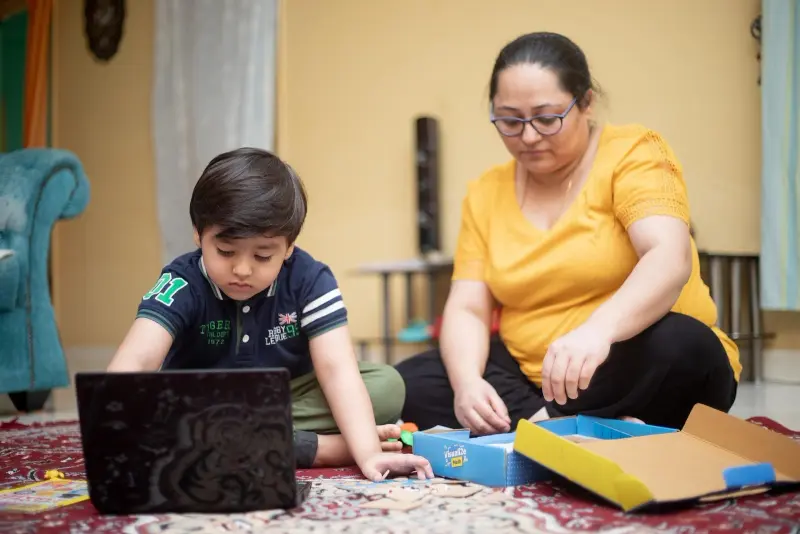
#3. Debugging
When we’re talking coding, the technical meaning is identifying and fixing errors (syntax errors, logical errors, runtime issues) in the code. In life, it can mean similarly identifying emotional problems, technical problems, relationship problems, internal problems, the whole range of them.
But let’s not forget, debugging is often slow and frustrating. It’s a tedious job, it requires the determination, the grit, the time, the effort that modern children often are not used to. I’m a mom myself, and I see it every day. Gaming is faster than it used to be. TV shows and movies are faster, social media is faster. Everything is instant. Boom, boom, boom. In this world, effort and time is rare, and kids are not willing to put in more than the bare minimum.
That’s not going to fly here. Coding is meticulous and slow sometimes. You want a result? Great! Identify, find, and fix the tiniest problem that keeps the whole game from working. This creates results, people! Real lessons to be learned:
Failure is diagnostic, not personal
Errors are data
Persistence beats panic
Frustration tolerance
Emotional regulation
Iterative improvement mindset
#4. Abstraction
In coding, it means focusing on essential details while ignoring unnecessary complexity. How priceless is that? We, adults, just look around. Who can ACTUALLY differentiate the important from the fluff in life? Separate the wheat from the chaff, so to speak. Not many I know, that’s for sure. Abstraction in coding teaches your little ones that:
Not everything needs full emotional involvement
Simplification is strength
Complexity can be layered
Strategic detachment
Pattern recognition
Mental organization
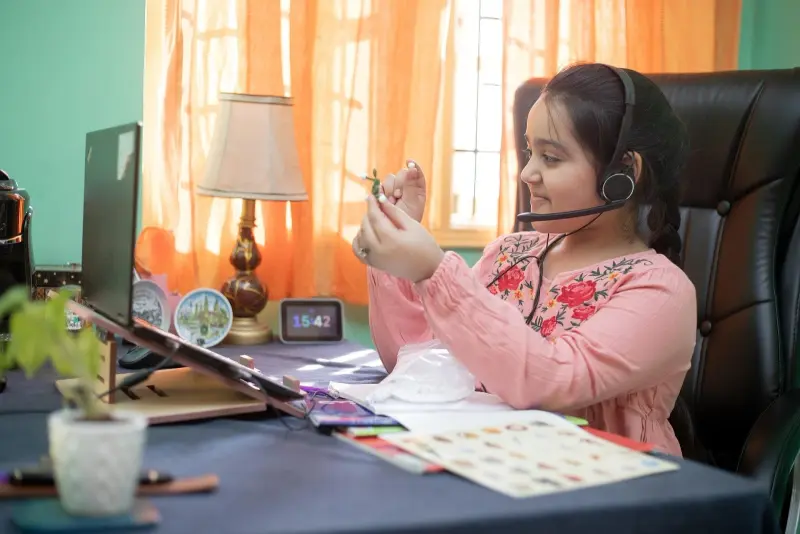
#5. Iteration & Versioning
This is probably my favorite one of the five. Let me tell you why. School often teaches us (taught me for sure) that mistakes are bad, and being right is good. Well, look, there’s no denying that. But here’s what we threw away with the bathwater.
It is better to do something badly first, then not do it at all.
Every bad code, every bad DIY project, every bad beginning, an awkward run, a sloppy jump, a crooked picture has the POTENTIAL to be good once you work on it. That’s an idea often overlooked. If it doesn’t exist, how can you make it better? It’s the same with language learning by the way. First you speak badly, then you work on it to polish. No one comes out of the womb speaking correctly.
What does this have to do with coding? Code improvement always comes in cycles:
Version 1 - imperfect
Version 2 - improved
Version 3 - optimized
Nothing is built perfectly the first time. This is a lesson to try harder, and gain some resilience in this world.
Growth is cumulative
Progress means more than perfection
Improvement is normal
Growth mindset
Patience
Long-term thinking
This is my version of why coding is a basic skill for kids. We don’t know the future so who knows if manual coding is here to stay. But here’s what I know. These 5 skills that come from habitual coding will benefit your child throughout their life and make them a more resilient human.