The Best Uses of Generative AI for Kids: Creative Learning Unleashed
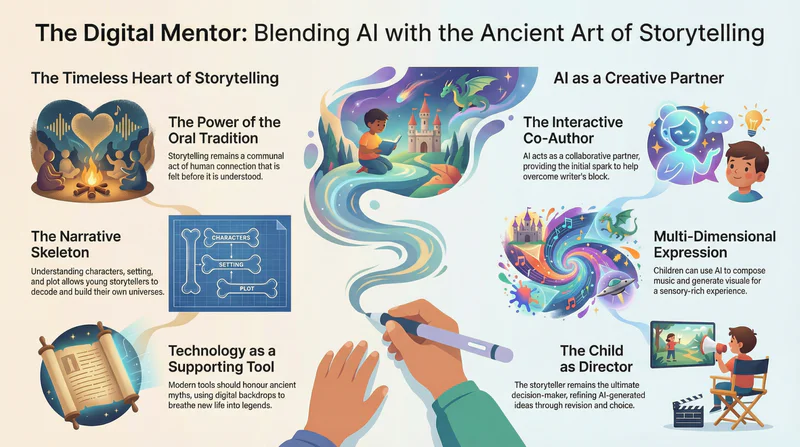
Think back to the last time you saw a child truly lost in a daydream. Maybe they were staring out a window, or perhaps they were scribbling frantically in a notebook. In those quiet moments, a world is being built. Today, those internal worlds are getting a massive boost. Generative AI for kids is becoming a heart-centered bridge between the flickering spark of an idea and a fully realized masterpiece. We are moving beyond the era where tech was just a glowing screen; we are entering an age where artificial intelligence acts as a gentle, digital mentor.
It’s about how we make things in the modern world. When we consider the sweep of human history, we see that our drive to share stories has always been with us. Whether it’s crude drawings on cave walls, or the colorful digitized images of our now, human intention remains consistent: be seen, heard, no matter how invisible we feel, and ultimately just understood. AI is more like the latest brush in our arsenal that ensures each young storyteller can discover a voice of his or her own.
The Warmth of Our Shared History
Before we talk about algorithms, we have to talk about the fire. Long before we had the written word, we had each other. Oral storytelling is the heartbeat of our species. This oral tradition served as a way to keep a family's culture alive, passing down lessons about bravery, kindness, and what it means to be human. It wasn't about dry facts; it was about the feeling in the room when a good story reached its climax. When we engage in telling stories together, we weave a tapestry of shared reality that spans across generations.
When a storyteller engages with oral storytelling, they aren't just reciting a script. They are telling stories that come from a deep place of wonder. The oral tradition is inherently communal. It requires a storyteller to look their audience in the eye and adjust the style based on a gasp or a giggle. This is where real learning takes place, in the connection between the speaker and the listener. The oral tradition reminds us that the best stories are those that are felt before they are understood, creating a memorable bond that stays with the audience for life.
In the past, this was the only way to keep our myths alive. Today, we can use AI to breathe new life into these ancient tales. Imagine a storyteller using a digital tool to generate a visual backdrop for a family legend they are telling. The technology doesn't take over; it supports the performance. By honoring the tradition, we ensure that technology remains a tool for human connection, not a replacement for it. We can see how telling stories remains a bridge to our past, even as we look toward the future.
The Anatomy of a Good Story
Every memorable Narrative has a skeleton. We call these story elements. For a storyteller, learning about characters, setting, and plot shouldn't feel like a chore. It should feel like discovering the secret codes to the universe. When they understand how these elements work together, they can create stories that actually move people. This structural development is key to turning a simple idea into a compelling journey.
Characters are the most important part of this journey. A good story needs someone to root for, someone with a Perspective that feels real. When a storyteller builds a hero, they are really exploring different parts of themselves. They are learning how a Perspective can change based on what has happened in the past. They might ask, "What happened to make this hero so brave?" or "What happened to the villain to make them so lonely?"
Setting the scene is just as vital. Whether it’s a fantasy forest or a gritty city, the world needs to feel lived-in. Through AI, a storyteller can explore different genres and see how the environment influences the Narrative. They might create a novel mystery where the setting itself is a character. This helps them develop a narrative structure that feels satisfying to an audience. As they layer these stories with sensory details, they realize that storytelling is about building a reality that others can step into.
As they experiment with conflict and resolution, they learn that a good story is a journey of development. They see how events need to lead naturally into one another. This isn't just about writing; it’s about understanding the logic of the human experience. When they master these elements, their creativity becomes a powerful force. They learn that every word has weight and every word has the power to inspire change.
A New Way to Create
The introduction of AI into the classroom is like having a co-author to help you write numerous stories without getting tired. AI can help take those tiny ideas and turn them into something compelling. For example, if a student has an idea for a novel about a space-traveling cat but doesn't know how to start, the AI can offer a few opening scenes. This initial spark of AI assistance helps create a sense of fun that keeps the storyteller engaged.
This process is deeply interactive. The storyteller remains the director. They look at the AI-generated stories and decide what stays and what goes. This back-and-forth is where the real writing magic happens. It teaches them that telling stories is a process of revision and choice. This interactive nature of the technology ensures that the storyteller is always at the center of the Narrative.
The visual aspect of AI is equally transformative. For a storyteller who can see a memorable image in their head but can’t quite draw it yet, AI can generate pictures that match their description. This doesn't stop them from learning to paint; it just gives them a way to see their vision in reality right now. It opens up many ways to be creative. They can explore art forms like digital collage or concept art that were once out of reach. These images serve as a bridge to other art forms, proving that art is a language without borders.
Embracing Every Form of Art
We often think of storytelling as just words on a page, but it is so much more. It encompasses a vast array of art forms. When a storyteller uses AI to compose music for their latest fantasy adventure, they are engaging in a different kind of language. They are learning how sound can change the mood of a Narrative. This integration of music and art helps the storyteller understand that stories are meant to be felt with all the senses.
By exploring other art forms, such as animation or sound design, the act of telling stories becomes a multi-dimensional experience. They might use AI to create 3D images of their characters, bringing them closer to reality. This holistic approach to art ensures that the interest of the student never wavers. They are constantly finding new forms of expression, from digital songs to visual scenes that capture the heart.
We should encourage telling forms to look at other art forms as well. Maybe they want to turn their story into a presentation or a short play. AI can help them write the dialogue or design the costumes. This development of storytelling skills is what will set them apart in the future. They aren't just writers or artists; they are world-builders who understand that art and culture are intertwined in every good story.
Community and Connection
In this journey, it’s important to remember that we aren't alone. Organizations like the National Storytelling Network provide a home for those who love the craft. The national storytelling network reminds us that telling stories is a communal act that not only connects us to our history but also to each other. By participating in these communities, we find lessons that have been passed down for centuries, ensuring the oral tradition never fades.
By engaging with these communities, parents and teachers can find forms that help balance tech with tradition. They can learn how to use AI to inspire a new generation of storytelling forms. The goal is to keep the fun in the process while still teaching the serious history of the art. Whether it is a local storytelling festival or an online workshop, these events provide the fuel for a lifelong passion for stories.
We want our telling forms to be the kind of storytelling forms that can hold an audience captive with just their voice, but who can also use AI to build a digital universe. This blend of ancient wisdom and modern possibilities is where the future lies. It’s about using every tool available to share a message that matters. When a storyteller shares their Narrative, they are inviting the audience into their world, creating a moment of pure human interest.
Nurturing the Young Mind
As a storyteller grows, their Narrative becomes more complex. They start to tackle deeper themes and more intricate scenes. This is the natural course of creative development. They learn that what happened in a story is often less important than how the characters felt about it. They begin to see that stories are the way we explore the big questions of life.
In this course of learning, the role of the adult is to be a guide. We should be there to help them explore the possibilities and to answer their questions. When they hit a wall, we can suggest a new word or a different Perspective. We can show them that writing is a way to process the world around them. By providing a Perspective of encouragement, we help them find the confidence to share their tales with a wider audience.
The history of our families is often found in the songs and stories we share. By encouraging our telling forms to create, we are helping them write the next chapter of that history. Whether they are using AI to generate images or simply telling stories at the dinner table, they are participating in something beautiful and ancient. These events might seem small, but they are the building blocks of a vibrant culture.
The Ending is Just the Beginning
Every good story has to end, but every ending is a chance to start something new. As our telling forms move forward, they will carry these stories with them. They will remember the fun they had building world forms and the lessons they learned along the way. They will understand that the power of the word is only limited by their own imagination.
The AI tools we use today will change, but the desire to create will remain. We will always need characters to love and tales to tell. We will always seek out the memorable moments that make life feel like a fantasy come true. The stories we tell today become the history of tomorrow, and the Narrative we build now will define the world our children inherit.
So, let's give them the space to explore. Let's use AI to create images of their dreams. Let's listen to their oral storytelling with an open heart. Because in the end, it’s not about the technology; it’s about the child and the stories they have to share with the world. Let us celebrate the creativity that makes every child a unique storyteller, ready to create stories that will light up the past, present, and future.
Imagine the possibilities when we stop seeing technology as a barrier and start seeing it as a partner. A storyteller can write a novel about a journey to the center of a star, using AI to help with the scientific dialogue while they focus on the emotional heart of the Narrative. They can explore different genres, from gothic horror to high fantasy, finding the style that fits their voice perfectly. This isn't just a presentation of facts; it is a presentation of their soul.
As they dive into these scenes, they learn that telling stories is an act of bravery. It takes courage to put your ideas out into the world. But with AI as a safety net, that leap feels a little less scary. They can test out different themes, seeing how a message of kindness might land compared to a message of strength. They can see how events in their own life can be transformed into Narrative gold. This is the true gift of storytelling, the ability to turn the ordinary into the extraordinary.
We are all part of a grand, ongoing Narrative. From the first fire-lit oral tradition to the most advanced ai of 2026, the thread remains unbroken. Let us help our telling forms pick up that thread and run with it. Let us inspire them to create stories that are as bold, beautiful, and diverse as they are. Because as long as there is a storyteller with a good story to tell, the world will never be a dark place.
Frequently Asked Questions
What are the most effective ways for telling forms to use generative AI for kids to improve their writing?
A storyteller can use AI to brainstorm ideas or to help with the narrative structure of their work. It acts as a collaborative partner that can suggest a word when they are stuck or help them explore different genres. By observing how AI handles story elements, telling forms can refine their own style.
Can artificial intelligence actually teach a storyteller about human empathy?
While AI itself doesn't feel, it can help a storyteller explore different characters and their motivations. By telling stories from a unique Perspective, a storyteller practices putting themselves in someone else's shoes. This helps them create a more compelling and memorable Narrative that reflects real human emotions.
How do you answer concerns about AI replacing traditional art forms for storytelling forms?
The answer lies in balance. AI should be seen as an addition to other art forms, not a replacement. A storyteller still needs to experience the tactile fun of physical art. AI simply provides a different language for creativity, allowing them to create stories in ways that were previously impossible.